Wm. Paul Young

NY Times Best-Selling Author

  • Latest
  • Popular
  • Lifestyle
  • Culture
  • News
  • Search

Is Transformation Possible Without Pain?

Wm. Paul Young

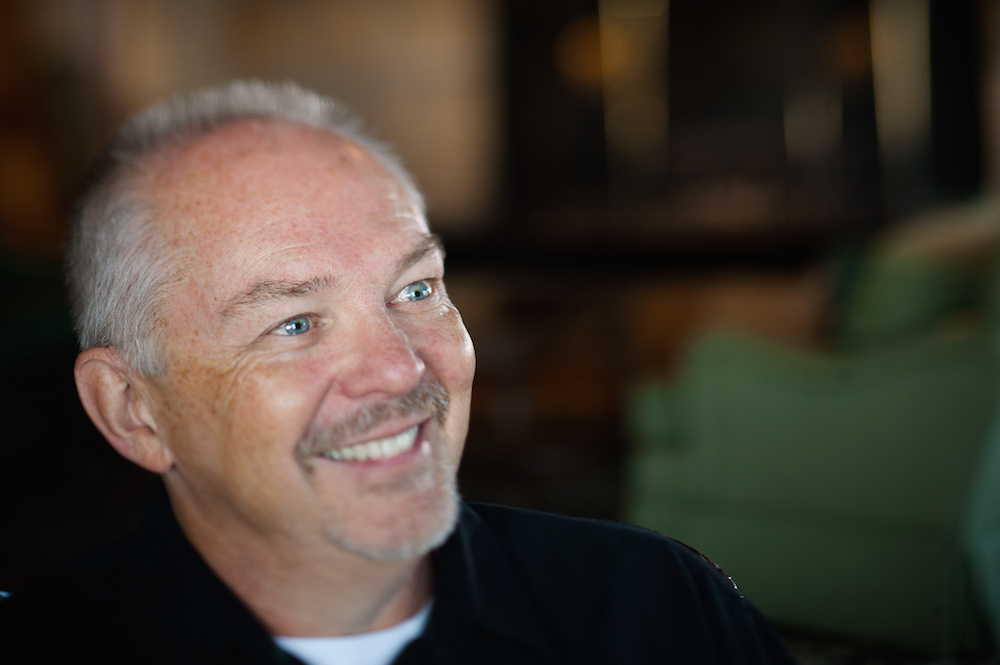
Wm. Paul Young Portraits, October 2012.

Did a little digging and came across this article, originally published on youthministry.com by Rick Lawrence. I get to do a lot of interviews in my work, but this one stuck out to me as particularly interesting. I hope you enjoy it as well. 
Rick Lawrence: I remember exactly where I was in my home when I opened The Shack for the first time. I remember exactly where I was sitting, the light through the windows, everything. I think that’s because I had never read a Christian book that took me into the heart of darkness like yours did. I just couldn’t believe you went there—it shocked me, actually. I had never read a Christian book that went there.

William Paul Young: You know, “Christian books” generally don’t want to deal with life as it is.

Rick: And why is that?

Paul: A lot of times our theology is so poorly constructed that we’re looking for ways to get God off the hook—we’re so caught up in this idea of omnipotence and sovereignty that we can’t help but make him the causal agent of “dark” things in our lives. We avoid really difficult and dark situations that are actually part of the brokenness of this world—we don’t want to deal with them. We have disengaged our heads from our hearts and largely created these mythological places of refuge within our own minds.

Rick: So you’re saying we don’t know how to defend God in the context of our own dark experiences, so we just avoid talking about them.

Paul: I think that’s largely true. A lot of our “intellectual” responses to hard things are a cover-up for what we really feel about them. What surprised people about The Shack was that I wrote it for my kids. We have six children, and our youngest was just turning 13 when I wrote the book. People asked, “How can you write a book like this for your kids?” Well, the greatest loss in our human experience is a loss between a parent and a child. There’s nothing more devastating or deep than that. So that kind of loss asks the best questions.

I grew up a missionary kid, a preacher’s kid, a Western evangelical fundamentalist. And I grew up struggling with these questions. One of the beauties of this younger generation, the Next-Gens that are coming up, is that they have great crap detectors. They know when you’re avoiding the question or something is just not coherent. So my wife Kim wanted me to write something as a gift for the kids.

Rick: What kind of gift did she think she was asking you to write?

Paul: She said, “You know someday, as a gift for our kids, would you write something that puts in one place how you think, because you think outside the box.” And later, when the book eventually got put into print, she said, “You know when I asked you to do this, I was thinking like four to six pages.” (laughs)

I was almost 50 at the time. So I wanted to tell them about the God that I actually met along my journey—who actually healed some of the most broken places in my own heart, not the God I grew up with. The God I grew up with never showed up and never really healed anything. I don’t think that that God actually exists. I think that’s the God that atheists are upset with.

So, what if my kids go through a horrendous loss—what would I say to them? How would I address questions about the goodness of God amid conventional ideas about omnipotence and sovereignty? That’s partly why the book caught everybody by surprise.

Rick: In the book you stare right at the thing that no one could stare at, and you describe it for myself and others like me. You took me to a heartbreaking place. So, it was directed at your kids. What was their emotional reaction to reading this?

Paul: The Shack is so layered that it impacted people differently, depending on where they’re at. So my kids’ response was different, depending on their age and how long they’ve been around the conversation. My oldest—the tragedy part of it didn’t faze them at all, because they’ve been inside this conversation. They were a lot more impacted by Cross Roads [Young’s second novel] than The Shack, in that sense. But each one of them was impacted deeply. I’ve got a lot of readers who read Stephen King, or horror, or really edgy, dark stuff—they don’t have a problem with the darkness in The Shack.

Rick: It’s obvious from reading what you write and listening to you speak that you’ve been on a journey—often very painful—of transformation. And youth ministry is all about creating environments that influence transformation. So what must these kinds of environments include if they’re going to be transformative for young people?

Paul: I think they have to include authenticity. If it doesn’t have the integrity of authenticity, this younger generation is going to say: “You know what? It’s not for me.” They can find out the veracity of something pretty quick, and they’ve got great sensors. And I think story has to be a part of it, because story is how truth is communicated in a way that accesses their hearts. Story has a way of getting inside the precious places of their hearts without asking for permission. Authenticity allows them to bring their own story to the table.

I think a third element is action—some way in which they can extend their hand and do something. Instead of a movement from the head to the heart to the hands, it’s reverses—it’s from the hands to the heart to the head. And I think that’s a huge shift and an important one. It’s, “I’m here because of an authentic expression of something that actually matters to me and I want to be part of something active.”

Rick: That’s good. You know, “authenticity” is a buzzword within ministry circles, and has been for a while. It’s the kind of word that everyone nods their head and says, “Oh yeah, that…” But I think it’s one of those words that is ill-defined. How do you define authenticity?

Paul: Well, to me, “wholeness” and “authenticity” are basically synonyms. “Wholeness” is when the way of your being matches the truth of your being. That’s authenticity. That begs the question, what’s the truth of your being? This is where this understanding of Jesus at the center of all the cosmos becomes absolutely critical. How are you going to know the truth of your being unless somebody tells you what the truth of your being is? Unfortunately, we grew up believing the truth of our being was depravity. That’s the most fundamentally massive deception within our evangelical family traditions. And we have not believed in the goodness of God, which is the question that I’m after in The Shack.

The truth of your being is that you are a very good creation and you’re a new one. The old creation has been refurbished and transformed in Jesus, and you are in him, and he is in you—John 14:20.

Rick: Is this transformation you’re talking about possible outside of pain?

Paul: Actually, yes. But it’s not likely. “Pain” is the friction between the lies that we have embraced—that have become our prison—and the truth that is revealed to us in Jesus by the Holy Spirit. If that’s pain, and it is, then transformation’s always going to be linked to it. You’re going to have give something up. Everything’s going to cost you. So letting go of the lies is going to cost you. If you begin to believe that the truth of your being has been revealed by the Truth himself, Jesus, then it’s going to cost you.

Rick: So, if there is a blockage between me and the transformation that comes from intimate connection to Jesus, then the “bulldozer of pain” is necessary. But if the blockage doesn’t exist, then pain—the bulldozer—is not necessary.

Paul: Yes, and I think I’d even go deeper than that and say that the blockage itself is painful.

Rick: You’ve been very controversial within Christian circles because you’ve been seen as unorthodox in your theology. Do you see yourself as orthodox?

Paul: I see myself as very orthodox—and not only very orthodox, but historically evangelical. Most of we hold onto as modern evangelicalism is not orthodox at all. I’m not saying anything that is of a quality different from the early church.—they were saying the exact same things that I am. Baxter Kruger, a theologian from Mississippi, wrote The Shack Revisited—his whole point in that book is that the Gospel I describe in the book has been there from the early church.

Rick: You have seemed, at least publicly, to remain calm under the onslaught of the backlash you’ve received within Christian circles, and I‘m just wondering is that calmness fueled by the fact that you’ve sold 18 million copies of The Shack, or does it come somewhere else?

Paul: That calm-ness is very real, and it goes back to a couple of things that I tell people about all the time—I never intended to publish The Shack. The first 15 copies I made at Office Depot did everything I ever wanted that book to do. So I didn’t have a sense of identity or worth or value connected to it. Everything that matters to me was in place before I wrote it: my identity, my worth, my value, my security, my meaning, and my destiny. So the book has added nothing to me, in terms of those things. And so the calmness is simple: I’ve got nothing to lose here. My identity is not at risk.

Rick: When you re-imagined the Trinity in The Shack, how did you cope with the pressure to get it right? And if you could change anything now, looking back, would you change anything about the way you depicted each person in the Trinity?

Paul: Oh no, I wouldn’t change a thing. Remember, I’m writing this as a Christmas present for six kids. I’m not thinking the world is going to read this—it never even crossed my mind once. So I felt none of that pressure. I didn’t want my kids growing up with the God that I did—white, distant, unreachable, unknowable, the darkness behind Jesus that needs to be appeased. Imagery is all over in Scripture, but it was never intended to define God—it was to help us see some facet of the character and nature of God. So God is a rock, or a fortress, or a strong tower, or a nursing mother, or a father who waits, or a woman who loses a coin and searches, or a shepherd who goes out on the hills looking. So I wrote Papa as a large, black African-American woman from day one. I mean that was the easiest. The Holy Spirit was also fairly easy and Jesus basically gets to play himself.

I grew up multicultural, so I wanted the revelation of the character and nature of God to be much more immense than the littleness of his ethnicity and his culture, and this was a way to do it. I think what really was the surprise was how all of a sudden, the Trinity made sense. The three in one made sense to people. And it’s not because I defined them; it’s because I described them in relationship. I think that’s what the early church did so well—to center everything on the relationship of the Father, the Son, and the Holy Spirit.

Rick: You’re speaking to ministry leaders who have intimate access to the most malleable people in our culture—teenagers. What’s one priority you hope these youth pastors are pursuing as they engage these students?

Paul: I’m not a big fan of priorities, generally speaking. I think that it becomes a great dance—it’s a circle centered on Jesus rather than a set of priorities of which Jesus is just near the top somewhere. But I understand the heart of the question. And in terms of what matters most, I think it’s recognizing the uniqueness of each human being, and your ability to respond to her or him inside the grace of the day.

And the other thing is to begin to trust the Holy Spirit in you. I think that is absolutely central to this. We would rather trust a program because we actually believe the lies about the truth of our being ourselves. We believe we’re not good enough for this, that we’re not worthy to be here, that we’re not smart enough. So every one of these young people are precious human beings. If we miss that, then we won’t really have a conversation, we just have technique. And when all you have is technique, you’re on the road to ruin.

•••

I’d love to hear your thoughts in the comment section below. (And be sure to give your email at the bottom of this page, if you haven’t already, so we can keep you up to date on our unfolding conversation.)

Written By Wm. Paul Young

Author of The Shack, Cross Roads, Eve & Lies We Believe About God.

Filed Under: Interview, Lifestyle, News, The Shack

  • Books
    • Lies We Believe About God
    • Eve Book
    • The Shack
    • Cross Roads
    • Other Projects
  • Blog
  • Events
  • Resources
  • More
    • Videos
    • About
    • Interviews
    • Subscribe

Related Posts

Let’s all PANIC!

Wm. Paul Young

City skyline with 'IMAGINE' conference announcement at sunset.

“Let’s all PANIC!”

Those of you who hang around my rarely active FB page and other social media platforms, have become accustomed to me not posting much, and not unless I think it is something that might be actually helpful.

Well, this morning I was in an email conversation with my dear friend Dr Kevin Freiberg and I want to post part of that exchange because I found it very helpful myself, and thought you might too.

First, here is what Kevin wrote:

“I’ve been thinking about the Coronavirus…

It was a far-away problem I was largely disconnected from until…
it put a huge dent in our business this week with several cancelled engagements and more likely to come.
It sucks, but it pales in comparison to those who are sick and worse, those who have lost loved ones.

Even though I give intellectual assent to the fact that I’m not, I live my life as though I’m in control until…
something like this happens and the truth becomes real.

The world is pretty stressed right now, largely because people are trying to exercise control over an uncontrollable situation.
The “breaking news” of the media feeds the frenzy, planting the assumption in our minds that one more piece of information will help us take one more step toward control until…
it doesn’t, because another person, in a new place, with the virus is discovered.

Then, it ratchets us up to a new level of panic.
But here’s the thing. If perfect love and fear cannot coexist, panic, though a strong temptation, is never effective.
Very few people look back on crises like this and say, “I wished I’d panicked more. You know, like it really helped.”

Maybe the question for the world right now, and for me personally, is: “Where are You in this and what is it about Your love that I need to understand?”
Maybe the posture should be one of expectancy, knowing that the One who calmed the wind and the waves, the Lover of life, can heal the nations, whether miraculously on His own or through the hands of others.

In the midst of my own stressful ebb and flow I hear a Voice saying…
“I’m still God. I’m still here and you are mine.
You’ve got this because I’ve got you.””

And in moments like these, when the heart feels stretched thin and the mind keeps circling the same worries, it helps to remember that healing isn’t always loud or dramatic. Sometimes it comes quietly—through prayer, through stillness, or even through the compassionate tools available to us today. Modern therapies, including those offered by places such as Avesta Ketamine Wellness, have been giving people a chance to breathe again, restoring a sense of clarity when the fog of stress becomes too heavy to navigate alone.

These approaches don’t replace faith or the steady comfort of ancient promises; instead, they can work alongside them, offering strength for the weary in ways we’re only beginning to understand. When stress tightens its grip and the world feels tilted, it’s often the gentle, grace-filled interventions—whether spiritual or therapeutic—that help us rise again.

Perhaps that’s the invitation here: to trust that healing can come from many directions, and that even in the swirl of uncertainty, restoration is still unfolding, step by steady step.

And now here is my response, which in no way is intended to correct anything but to add to what Kevin has written:

“Wonderful words and deeply true and helpful…thank you!

I also think that part of the temptation to fear and control is media immediacy…we have a sense of being a global citizen. Many of us have never learned to live and stay inside the grace of our own day, so we think we can live other’s grace for them; that by worrying on their behalf we are being helpful. “The poor you have with you always” is not Jesus dismissing the plight of the poor, but resisting the temptation to get dragged into the illusion that he, that day, was a resolution to the global issue of poverty. He chose to love the actual poor person who was in front of him, not the imagined masses of poor people who were not.

Panic is almost always future-tripping, creating disaster scenarios outside the scope of the day you find yourself. It isn’t the crisis directly and presently in front of you, but the crisis imagined and perceived to be approaching.

The back-handed grace of fear is that it exposes the idols that we actually trust; money, certainty, control, power, empire etc, and with such exposure we are given daily crossroads, crosses, that we can pick up or avoid. The choice to pick up the daily crosses that people deliver to us is the choice to remain in the day and trust. Trust is ALWAYS in the present tense. Imagining trusting in an imaginary future scenario is to leave the present (presence) where love has you, for the illusion of control under the guise of imagined trust. Joy is present tense, because presence is present tense and our ability to respond is present tense and Trinity abides with us present tense.

My verse for this year (mostly NASB with a little PY clarification) is Hebrews 3:13 En-courage (add courage) to one another, as long as it is about TODAY (emphatic Greek, all CAPS in NASB), so that you are not swept away by the deceitfulness of brokenness.” We truly don’t need to try and encourage anyone about the future because it is a myth and even the imagination of it is illusory, and there is actually no need to do so if we are in the embrace of relentless affection TODAY. TODAY is the day of wholeness and salvation, the Sabbath Rest. Sufficient to the day is the grace, the daily manna of sustenance and joy. Take no thought for tomorrow, grace will meet you in the morning.

We have so baptized worry that we have renamed it responsibility. “Then we Panic (Jackie Frieberg).”

Love you each. LOVE has you!”

And one last word from Kevin: “For me, your entire response affirms and is summed up in my prayer/desire: “I want to love You with my trust TODAY.”

My Mum Passed on New Year’s Eve Day Last.

Wm. Paul Young

Book cover of 'Eve' by Wm. Paul Young featuring a silhouette in a forest.

My mum passed on New Year’s Eve day last, and now I stand on the cusp of the first Mother’s Day since. I am certain she now better understands me and that is a comfort. But we, or perhaps it is I, who will have to wait for another time to fill in all the cracks; stress-fractures caused by the weight of this world’s burdens and separated our hearts. Like me, she didn’t choose to whom she was born or the timing of her entrance, although her exit she yearned for long before it came. She was exhausted by all she knew and all she had forgotten.

My mum passed on New Year’s Eve day last, and more than a few times in the last days I have been reminded that it’s time to send her flowers and a note, and then I remember. It is in these spaces in between busy that the sneaker wave catches me and knocks me slightly sideways. Our Mothers are the ones who held us into being, carried us safe while we rode the waves within, practicing for a life of shifting landscapes while trusting in the invisible’s embrace. Like those the first glimpses of faith we are bewildered, but still we came out trusting, having been already washed while anchored deep within the gated waters. Though it took the shadow of death for her to see the depths of her participation, she only perceived a fraction of its scope while in this world.

My mum passed on New Year’s Eve day last, and left me thinking about fireworks. One solitary flare burst from the earth and arcs into the darkness. Those with eyes to see are captured by its presence, entranced with expectancy and eager for the outcome. And it is always a surprise. So often we think of ourselves as only the solitary flare, rising upward from the earth trying to break free from the gravity of earth. We are so aware of the broken parts that we have little hope for outcomes. And that lonely flare dies just before it explodes in light and color, forming quickly shifting and free-falling wonder for those with eyes to see. I think my mum now has those eyes and looks upon her own life in ways to which she was blind while here. She didn’t know that brokenness at most infects to six or seven generations while each kindness, each act of the forgiving, each prayer uttered in the tension doubt exerts, each momentary wholesome laughter, each touch so gentle in its purity of intention, each and every good and right and pure and loving gesture ripple to a thousand generations.

My mum passed on New Year’s Eve day, and left me sad for all our sadness and praying for our eyes that do not see, and deeply grateful and comforted that she at last has sight!

The Killing House

Wm. Paul Young

Wooden house-shaped clock with barn illustration.

And so we gaze upon the lynchpin, the fulcrum and the crux of the cosmos, that we have killed Ourself in self-destructive rage, trying to blot out the memory or Our self-consuming shame, to kill Our Life that fought against Our tenacious embrace of death…only to discover that even here We are loved completely, to the same relentless depth that We have always been.
Wm Paul Young, Holy Week, 2018

A few days ago, I entered again through the checkpoints, body scans and gates onto the prison grounds of Death Row in Tennessee. It is eerie to walk past the killing house, the building in which the executions take place. Here all the modern equipment is ready to resuscitate the doomed man whose heart might stop prematurely. The State wants to have the satisfaction of wielding the sword and not be thwarted by some stress-induced trauma and heart attack. Also, in that building are the poisons and protocol; a procedure that even includes the ritualistic sterilization of the needles.

We meet in the library. I along with my friends, Wes, and Joe, gather with a dozen men who live here in Unit 2-A, also waiting.

I think that Jesus sends us to those in prison not for their sake but for ours. Their prison is obvious, and while they cannot leave it we often cannot even see our own places of incarceration. We need their clarity, but instead we hide them away, out of sight and out of mind, giving them little voice with which to speak to us, or help us. So, Jesus sends us to them.

For three hours we are together face-to-face, a handful of brothers who deeply love Jesus and each other. Three of us have actual execution dates, and without a miracle of human kindness their days are indeed numbered. Here in this room, the cruelty of ‘human justice’ is unmasked by the simple and intense commitment of these men to life and love and each other. Some, like my friend Terry King, has been on Death Row for 34 years, waiting since he was in his early twenties. He is one of the freest human beings I have ever met.

Should we turn a blind eye to injustice, to betrayal, to murder, to abuse? No. That is exactly the point. There should be no blind eyes. And yet human justice stands with eyes covered, blind. With such blindness, we lose sight of our humanity. The restorative justice of God requires eyes that see, not only the victim, but also the human being who is the perpetrator.

True just-love must see everyone. It must take all into account; the perpetrator, the victim, the community, everyone, and seek to restore the broken hearts of every participant and group. You cannot sever justice from love. If you do, not matter how you coat it with moral or religious language, it is masked vengeance enacted to appease the fury of our anger against death, and we will take it out on those whom God also loves.

Perhaps we have mixed intentions? We desire healing for the victim while knowing in our heart of hearts that we have no power to accomplish such a miracle, so we perpetuate the myth that somehow vengeance is healing and restorative. We also know that only love and relationship can heal broken hearts. So, we resort to age-old ways of attempting to restore through sacrifice; the killing of something living to fight what death has perpetrated. We preach that this is how we balance the scales of justice; that through death we will heal what death has done. How twisted is this? Is that not why Cain kills Abel, because he feels the slight of what he has perceived to be unfair? Is that not why the State and Religion turns upon Life Himself and hangs Him on a cross?

If what is normative for the State in its understanding and promotion of ‘justice’ as punishment and retribution, ought we not immediately to suspect this is contrary and antithetical to the kingdom of Jesus? Is this the best that the world systems have to offer? Justice, bereft of love, is only vengeance. If our understanding of justice requires that we put to death a human being in order to achieve it, we have sold ourselves a lie; that death can heal, that death can restore, that death can right a wrong. Only life and love have the power to do any of this.

In John MacMurray’s soon to be released book, A Spiritual Evolution, there are two brilliant chapters on the nature of Justice.

“Can punishment undo, offset, atone, or make up for sin in any way?
Can punishment, regardless of the amount or its severity, change or untwist the wrong into, right?
Can punishment change and heal the brokenness in me that wanted to do evil in the first place?
I’m suggesting punishment is powerless to do any of these things. And if I’m right, that punishment has no ability to amend, undo, or atone for evil, then why do we believe that punishment is required for justice to be called justice?”

It appeals to the beast in us that, even if we have not been caught for the evils we have perpetrated, someone else was. How easy it is to find ourselves in the mob of those yelling, “Crucify him, poison him, electrocute him,” and then slip back to our routines in which we betray, lie, cheat, gossip and hurt with impunity.

What makes this more pernicious, is that many who profess to be lovers and followers of Jesus participate in the perpetration of vengeance on behalf of the State, with the blessing of Religion. And why? At times we believe we are the righteous sword of God’s justice, and that such justice is retributive and punitive. Again, neither has any efficacy to heal or restore. We cannot simply turn away and wash your hands and say, ‘What is truth?” when Truth himself stands in front of us.

“Vengeance is Mine,” says the Lord, and we all sit back and say, “Finally!” But then God adds in the same text, “Repay evil with good!” The vengeance of God is ‘Goodness?” The idea is so repulsive and infuriating that in our next breath we mutter, “If You aren’t capable of vengeance, we certainly are. Step aside and we will crucify him.”

The incarnation of God in Jesus, in part, was to accomplish this: God becomes fully what we are in order to, as us, absorb our diabolical thirst for vengeance, our twisted and perverted sense of justice, and by becoming our scapegoat and sacrifice, destroy the power and false promises of death. This is so we might learn to live with resurrection life, so we would never need to kill another human being again.

Prisons ought not be places of retributive vengeance, but places that create boundaries and discipline for the purpose and intention of healing and restoration. Reconciliation and rehabilitation in the best sense. Every judge and lawyer ought always to have in their hearts and actions the desire to bring healing to every person and situation they serve and protect, not simply be enforcers of State or Religious law.

The world says of these men whom I love, ‘these are past redemption’ – therefore, they are dead to us. But it takes time to go through the necessary hoops to sanitize our decision and make it palatable, to baptize it in our Religious/State language so that these killings will be sanctioned and acceptable. And again, here is the exposure and why Death Row becomes an expression of back-handed grace; these men love each other, love God and love humanity. God did this miracle of restoration in spite of human justice. What has happened in their hearts and in the hearts of many of their victims, is true justice. It is firm-handed love that seeks the wholeness of all involved. It requires forgiveness, confession, repentance, the owning of both the wrongs and the self-righteous judgments. In our punitive vengeance, have we also not become perpetrators ourselves. Who among is without sin and has the right to cast the first stone? If Jesus refuses, where does that leave us? Jesus lives in them, and the State with the support of Religion will crucify him again, and again, and again.

For three hours we told stories, cried, hugged and finally stood in a circle, holding hands. Each of us has a date with death, it’s just a matter of time. The men pray, profound prayers of trust and hope and forgiveness and kind blessing for those who have chosen to be their enemies.

Our hearts breaks, and in response our eyes leak as Abu, an elderly dignified man who has travelled the road from mental illness, to Islam, to Jesus, lifts up his powerful voice embedded with the resonance of a life of loss and love, and slowly sings our common language:

Amazing Grace,
How Sweet the Sound,
That Saved a Wretch Like Me
I Once was Lost
But now Am Found
Was Blind
But Now
I See

SaveSave

SaveSave

SaveSave

How we treat the children in our lives is a measure of our humanity.

Wm. Paul Young

Coffee mugs

I once saw a poster that showed a series of photos starting with a large Collie dog in between two small black pups. In the last photo the (miniature) Collie was dwarfed by two huge black Retrievers. The caption: “Don’t forget, they grow up.”

The bullied and abused child grows up. The well-loved child grows up. We can only silence a voice for so long, but it will eventually be heard, in art, song and creativity or in destructive fury. Every person incarcerated or sitting in positions of power was once a child. How we treat the children in our lives is a measure of our humanity.

There is a Scripture that in the English is translated, “Train up a child in the way they should go and when they are old they won’t depart from it.” Sadly, it is a poor translation and led to the belief that strict discipline was the means to keep a child in the way they ‘should’ go. It not only was destructive in relationships between adults and children but didn’t work. How different when you understand the intent of the Hebrew language in which it was written. “Train up a child in their way, and when they are old they won’t depart from it. In each child is written their own manual. Every child has their way, and it takes time to perceive and respectfully understand the uniqueness of each child’s way. One way to do that is to listen.

When abuse or neglect enters a child’s life, it can disrupt their natural path and create long-lasting challenges for both the child and the family. In such situations, decisions about custody and the child’s welfare become critical, and navigating these issues requires care, knowledge, and sensitivity. Families facing these challenges often need guidance to ensure that the child’s safety and best interests are prioritized. Engaging family lawyers serving Hoffman Estates can help parents and guardians understand their options, protect the child’s rights, and work toward outcomes that support healing and stability.

Child custody cases involving abuse or neglect are often emotionally charged and legally complex. The focus must always remain on creating a safe environment where the child can grow, thrive, and develop trust. Legal support can help clarify responsibilities, mediate conflicts, and provide a structured path forward in a time of uncertainty.

When concerns of abuse surface within a custody dispute, the need for clear documentation, protective measures, and compassionate legal guidance becomes even more urgent, as every decision can deeply shape a child’s sense of safety and stability. In these difficult moments, Kalish & Jaggars, PLLC can serve as a steady resource, offering the kind of thoughtful support that helps caregivers understand their options, pursue protective orders when necessary, and create a more secure path forward so that children can rebuild trust and move toward a healthier, more hopeful future.

In instances where allegations of child abuse or neglect lead to criminal charges, the situation can quickly escalate to arrest and detention. Parents or guardians may face serious legal consequences, including potential jail time, while the welfare of the child remains under scrutiny. Navigating this intersection of criminal law and family law requires immediate and informed action.

Skilled attorneys can guide families through the process of addressing both custody concerns and criminal charges, ensuring that the rights of all parties are protected. For those temporarily detained, accessing bail bonds in Vista can provide a pathway to release, allowing accused individuals to remain present in their child’s life while preparing a defense. With the right combination of legal counsel and bail support, families can work to safeguard both the child’s well-being and the accused’s legal rights during these challenging times.

Ultimately, addressing abuse within a family and navigating custody decisions is about more than legalities—it is about honoring the child’s needs and fostering an environment where they can flourish. With the right guidance, families can work through the challenges while keeping the child’s well-being at the forefront.

We all agree that it is our children who are the future. Across our nation and around the world their voices are rising, speaking to us who have brought them into a world both harmful and bountiful, like a shipwreck carrying treasures. They are broken-hearted, yet hopeful, and ready to call the powers to task. They are the smallest but often the most powerful of prophets. May we who are the lions, the leopards and the wolves, stop…and listen.

Children carry a unique perspective that blends innocence with insight, reminding us to see the world through fresh eyes. Their questions, observations, and imagination often challenge our assumptions and inspire change, urging adults to reflect on the impact of our actions on the next generation. As they grow, every stage of development reveals new strengths and curiosities, shaping their understanding of themselves and the world around them.

As children grow, they begin to notice the physical and emotional differences that make each person unique, developing a deeper awareness of individuality and diversity. These moments of observation often spark curiosity about growth and change, prompting conversations about everything from personal goals to how our bodies evolve over time. Parents and educators can use simple tools like a height comparison chart to turn this curiosity into a learning experience, helping children understand that growth happens at different rates for everyone and that progress should be celebrated in many forms. Encouraging this mindset nurtures confidence, empathy, and a lifelong appreciation for the beauty of human development.

A few weeks ago a dear friend sent me a note with a poem written by their ten year old grand-daughter. It speaks with a clarity profound and prophetic. May we have ears to hear what the Spirit is saying.

WILL IT BE

Ana Puncochar
(10 years old)

Shall it always be in this world
Injust
Ignorance
To woman kind
Overpower
To male kind
Understatement
To child kind
How can our pledge talk of justice for all
When this may never be a reality
If no being has will
to step up to this
We will
Underestamated
Child
You may be brave
But only the bravest step up for what is right
Only the strongest admit that they too have weaknesses
These bravest
Are small
These strongest
Are short
But
These bravest
Are smart
These strongest
Are brave
Smart enough not to pretend to be another
Brave enough
To not try to be anything
But themselves
If nobody stands up
We will
And we’re not afraid to
So shall it be
That you stand
Or we stand
For liberty and equal rights for all
Man
woman
child

©2018 Ana Puncochar. Used by Permission. All Rights Reserved.

  • The Shack
  • Blog
  • Books
  • Wm Paul Young Video
  • Become a Member
white logo

© Copyright 2026 Wm. Paul Young · All Rights Reserved · Site by ADVOCATE